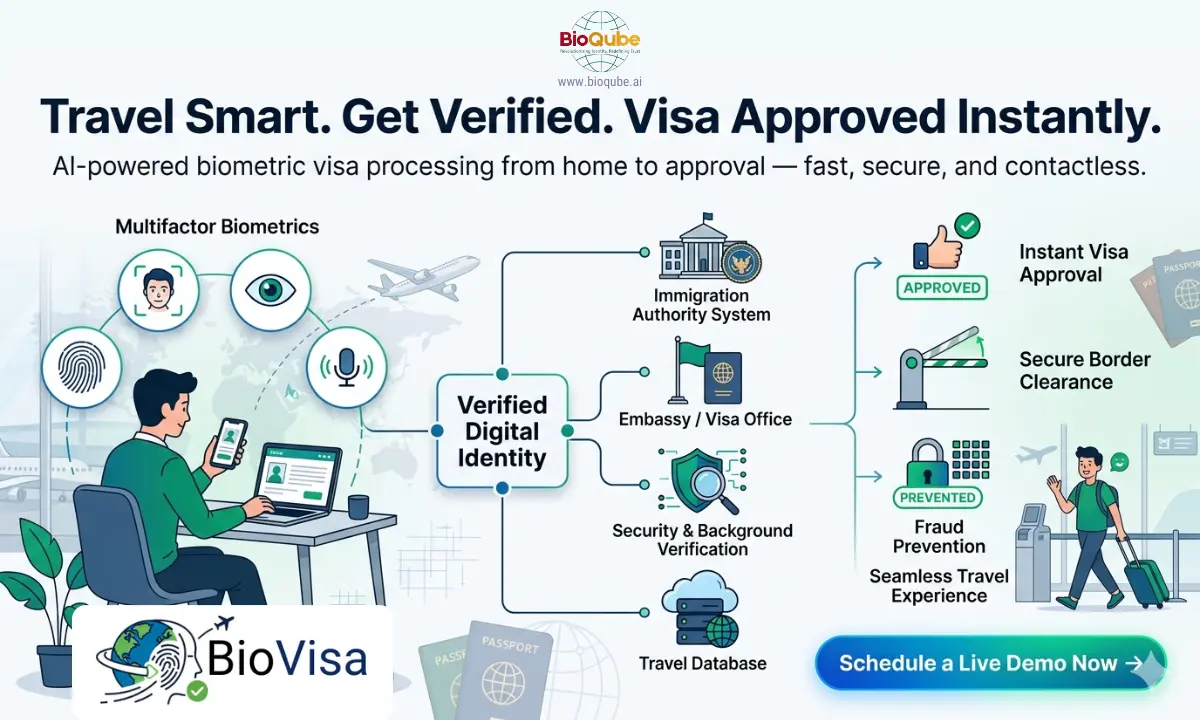
The Growing Need for Intelligent Visa Infrastructure: Global travel is rising. Fast. Governments are under pressure. More applications, more risks, more expectations. Traditional visa systems struggle to keep up. Too slow. Too manual. Too fragmented.
Paper-based workflows still exist. Long queues. Delays everywhere. And fraud? Increasing, quietly but consistently. This is not sustainable anymore.
A shift is happening. Toward automation. Toward intelligence. Toward biometric visa application processing that enables a secure and scalable digital visa system. It’s not optional now. It’s necessary.
Table of Contents
What is a Biometric Visa Processing System?
A biometric visa processing system uses human traits. Unique ones. Face, fingerprint, iris, even voice. These are captured and verified to confirm identity. Not documents. Not just data. The actual person.
This creates stronger trust. Much stronger than traditional verification methods. Because biometrics cannot be easily faked. At least not at scale.
It also powers e-visa biometric verification, where applicants don’t need to visit embassies. Everything happens digitally. Remote. Yet secure. That’s the idea.
Challenges in Traditional Visa Processing
Legacy systems still dominate many countries. And they come with problems. Obvious ones.
Manual processing is slow. Files move from desk to desk. Sometimes lost. Sometimes delayed. It happens.
Fraud is another concern. Fake identities. Altered passports. Duplicate entries. Without real-time biometric checks, detection becomes difficult. Very difficult.
Then there is scalability. During peak travel seasons, systems collapse. Not literally. But operationally, yes. Delays increase. Backlogs grow. Applicant experience suffers.
Clearly, something needs to change.
How Biometric Visa Application Processing Works
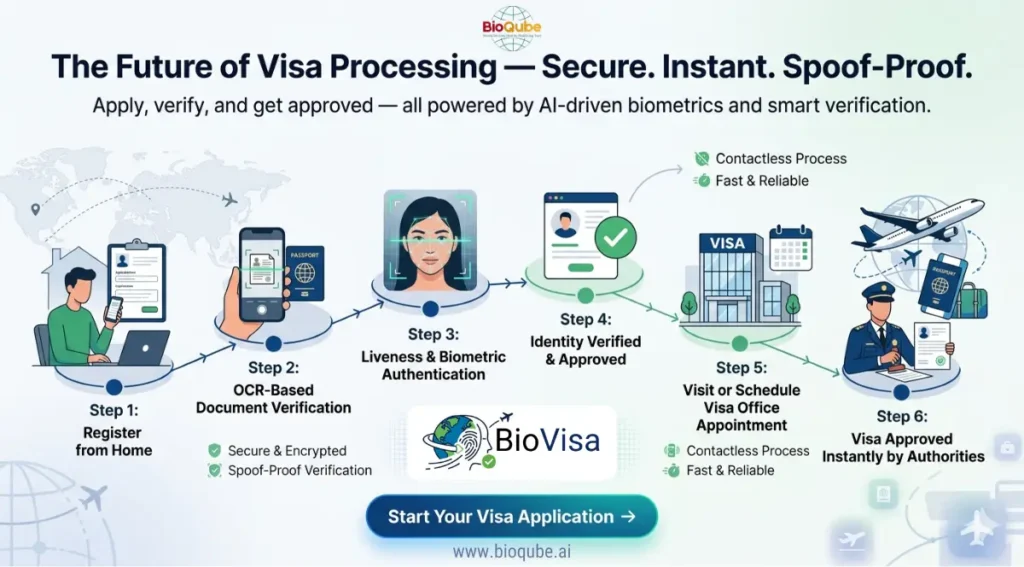
Step 1: Digital Application Submission
Applicants submit their details online. Simple interface. No paperwork. No physical visits. It saves time. For both sides.
Step 2: Biometric Data Capture
Biometrics are captured through mobile devices or authorized systems. Face first. Sometimes fingerprints. Depends on deployment. Liveness detection ensures that it’s a real person. Not a spoof.
Step 3: Identity Verification
AI checks everything. Document authenticity. Face match. Database cross-verification. If something feels off, it gets flagged. Instantly.
Step 4: Backend Processing and Decisioning
Authorities review applications through centralized dashboards. Automated scoring helps. Decisions are faster. Not perfect always, but faster.
Step 5: Digital Visa Issuance
Once approved, a digital visa is issued. Secure. Linked to biometrics. No physical stamp needed. Everything is connected now.
Integrating Advanced Solutions: The Role of BioVisa
Modern challenges require modern platforms. This is where BioQube’s BioVisa comes in. Quietly powerful.
BioVisa is built as an AI-driven biometric visa processing platform. End-to-end. From application to border control. Everything is connected.
It supports multifactor biometrics. Not just face. But multiple identity layers. This improves accuracy. And trust.
Applicants can complete the entire process remotely. Using their smartphones. No agents. No middle layers. It simplifies things. Quite a lot.
The system also supports global identity documents. Across countries. Which is important. Because travel is global. Systems should be too.
Integration is another strength. BioVisa connects with national databases, immigration systems, and watchlists. Real-time checks happen. Decisions improve.
It’s not just a tool. It feels more like infrastructure.
Key Benefits of a Digital Visa System
Enhanced Security and Fraud Prevention: Biometric binding reduces identity fraud. Significantly. Impersonation becomes harder. Duplicate identities get flagged quickly.
Faster Processing and Operational Efficiency: Automation speeds things up. What took weeks can now take days. Sometimes even hours. It depends, but still faster.
Improved Traveler Experience: Applicants prefer convenience. Remote access. No embassy visits. No long waits. It just works better.
Compliance with Global Standards: Modern systems align with international frameworks. Including ICAO. This ensures consistency across borders.
Scalability for National Deployment: Digital systems scale easily. Handle large volumes. Without major infrastructure changes. That’s a big advantage.
Use Cases for Governments and Border Agencies
Smart Border Management
Biometric verification enables faster clearance at borders. eGates. Automated checks. Less human dependency.
National e-Visa Programs
Governments can launch secure e-visa biometric verification systems. For tourism. Business. Even long-term stays.
Remote Identity Verification
Applicants complete everything remotely. This improves accessibility. Also reduces operational load.
Integrated Security Frameworks
Real-time integration with law enforcement databases strengthens national security. Threats can be detected early. Sometimes before arrival.
Why ICAO Compliance Matters
Standards matter. Especially in global travel. The International Civil Aviation Organization defines these standards. Widely accepted.
ICAO compliance ensures interoperability. Systems can communicate. Across countries. Across borders.
It also strengthens security protocols. Data formats are standardized. Identity verification becomes more reliable.
Without compliance, systems remain isolated. And that limits effectiveness.
The Future of e-Visa Biometric Verification
The future is evolving. Quickly.
AI will drive more decisions. Automation will increase. Human intervention may reduce. Not completely, but significantly.
Multifactor biometrics will become standard. Face alone is not enough. More layers mean more trust.
Decentralized identity models are also emerging. Giving users more control over their data. Governments will adapt. Slowly, but surely.
Real-time analytics will enable predictive security. Not just reactive. That’s where things are heading.
Conclusion: Building the Next Generation of Visa Systems
Visa systems are changing. They have to.
Biometric visa processing offers a clear path forward. Secure. Scalable. Efficient. Not perfect, but much better than legacy systems.
Solutions like BioVisa show what’s possible when AI, biometrics, and digital infrastructure come together. It’s practical. It’s deployable. And it works.
Governments that adopt early will gain an advantage. In security. In efficiency. In global trust.
The future of visa processing is digital. And it’s already here.
Schedule a Live Demo Today!
FAQs (Frequently Asked Questions)
1. What is a biometric visa processing system?
A Digital Visa processing system uses facial recognition, fingerprints, or other biometrics to verify identity during visa applications, making the process secure and fraud-resistant.
2. What is e-visa biometric verification?
E-visa biometric verification is the digital process of validating an applicant’s identity using biometrics like a face scan during online visa application.
3. What are the benefits of digital visa application processing?
It offers faster approvals, reduced fraud, remote application access, and scalable operations for governments.
4. How does a digital visa system improve security?
A digital visa system links visas to verified biometric identities and checks applicants against databases, reducing identity fraud and unauthorized entry.
5. Can biometric visa processing be done online?
Yes, applicants can complete digital visa application processing remotely using a smartphone or laptop with secure identity verification.